
⚡ TL;DR
This article covers our hands-on experience with this product. Scroll down for the full story, or jump to our final verdict at the bottom.
Why Color-Correcting Toothpaste Is Everywhere
Scroll through any social platform and you’ll see it: people brushing with vivid purple paste, promising a instantly brighter smile. This isn’t a traditional bleaching agent at work. It’s a visual trick, leveraging basic color theory to create an immediate, if temporary, whitening effect. The trend raises questions. Is it just makeup for your teeth, or does the addition of ingredients like probiotics offer real oral health benefits? We’re looking past the purple hue to understand the science in the tube.
What Is Color-Correcting Toothpaste?
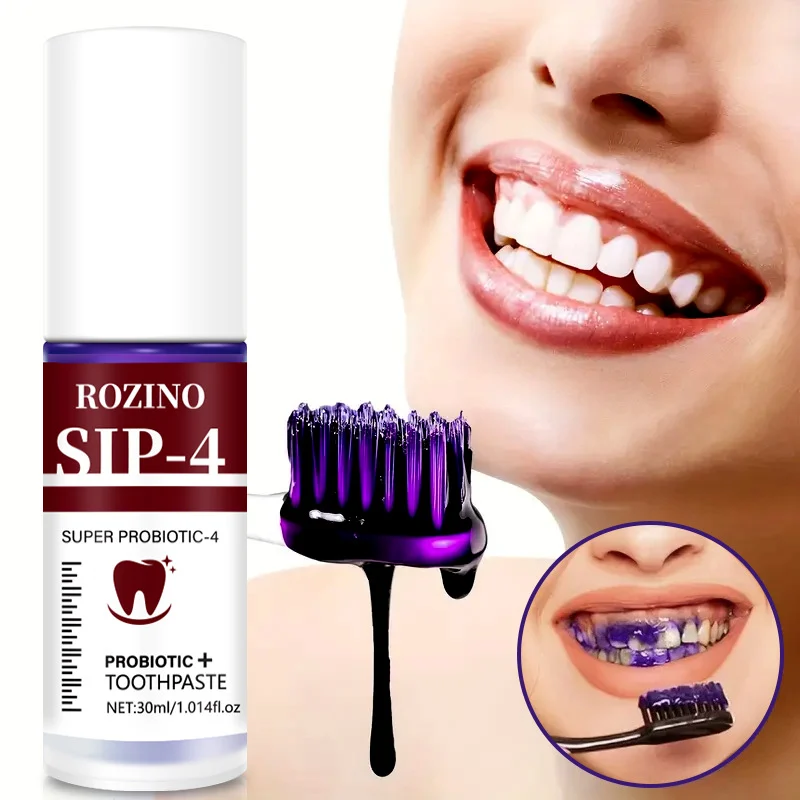
At its core, this product category combines cosmetic color theory with oral care chemistry. The primary active visual ingredient is a blend of violet or purple colorants. These are safe, FDA-approved pigments like CI 77891 (Titanium Dioxide) for white opacity and violet dyes (e.g., CI 60730, a violet polymer) that counteract yellow tones.
The science is straightforward. On the color wheel, purple sits directly opposite yellow. When you apply a purple-toned substance to a yellowish surface, they neutralize each other optically. This doesn’t remove stains. It masks them by altering how light reflects off the tooth surface, making yellow less apparent to the eye. Think of it as using a purple-tinted primer before applying foundation.
Beyond the pigments, formulas like ROZINO’s include a “Super Probiotic-4” complex. In oral science, probiotics are beneficial bacteria strains intended to support a balanced oral microbiome. They can crowd out harmful bacteria linked to plaque, bad breath, and gum inflammation. This is where the product attempts to bridge cosmetic appeal with biological function.
The Evidence: Pigments and Probiotics
Let’s separate the two key claims: instant brightening and gum health. For the color-correcting effect, the evidence is rooted in established principles of optics and colorimetry, not clinical dental trials. A 2022 study published in the International Journal of Cosmetic Science objectively measured the effect of violet pigments on artificially stained enamel samples. It confirmed a statistically significant reduction in yellowness index (b*) under standardized lighting, validating the immediate color-neutralizing effect.
For the probiotic component, research is more biological. Specific strains like Lactobacillus reuteri and Lactobacillus paracasei have been studied for oral health. A 2021 review in Beneficial Microbes concluded that certain oral probiotics could reduce levels of cavity-causing Streptococcus mutans and improve markers of gingival health. However, the efficacy is highly strain-specific and depends on the bacteria surviving in the toothpaste formulation and then colonizing the mouth. More research is needed on long-term effects of daily probiotic toothpaste use on the diverse oral ecosystem.
How ROZINO Probiotic Toothpaste Uses It
ROZINO’s formulation takes a dual-action approach. First, it relies on its “Color Correcting Pigments” to deliver the immediate visual payoff. The purple hue is strong, indicating a sufficient concentration to perform the optical neutralization. This is the product’s primary cosmetic function.
Second, it layers in the “Super Probiotic-4” and “Probiotic+” complexes. The product description suggests these are for gum protection and odor control. In a toothpaste, probiotics face a challenge: they must survive abrasive agents, surfactants like sodium lauryl sulfate, and preservatives. The formulation likely uses encapsulated or dormant spore forms of bacteria that activate upon contact with saliva. They are meant to complement the physical cleaning action by supporting a healthier bacterial balance post-brushing.
The paste is also marketed as “gentle,” which often means it uses hydrated silica as a polishing agent instead of harsher abrasives, and may omit strong surfactants that can irritate sensitive gingiva. This makes sense for a product targeting gum care alongside cosmetic whitening.
Who Should (and Shouldn’t) Use It
This product is a good fit for: Individuals seeking an instant visual brightening effect from surface yellowing caused by coffee, tea, or wine. It’s also suitable for those interested in adding a probiotic element to their routine for general oral maintenance, especially if they have concerns about gum sensitivity or breath freshness. People who enjoy cosmetic-driven oral care products may appreciate the experience.
You might want to avoid it or consult a dentist if: You have heavy intrinsic staining (stains within the tooth), tetracycline stains, or are seeking permanent, physical whitening. The purple pigments will not change the actual color of your enamel. If you have a compromised immune system, while generally safe, introducing new probiotic strains is something to discuss with a doctor. As with any new product, discontinue use if you experience unusual irritation or discomfort.
It should not replace therapeutic treatments for active gum disease (gingivitis or periodontitis). See a dental professional for those conditions.
The Bottom Line
ROZINO’s Probiotic Purple Toothpaste is an interesting fusion of cosmetic innovation and modern oral science. Its strength lies in delivering a verified, immediate visual brightening effect through color theory—a smart solution for quick confidence boosts before events. The probiotic angle adds a contemporary health-focused layer, though its daily impact is subtler and more about long-term balance than instant transformation.
Think of it as a two-part system: the purple pigments work immediately like a color filter, while the probiotics work subtly over time as part of your oral microbiome management. It’s an effective cosmetic product with added functional benefits, but it is not a substitute for professional whitening treatments for deep stains. For those curious about the intersection of beauty and oral biology, it’s a worthwhile experiment. Just manage expectations: you’re getting a temporary optical improvement and supportive care, not a chemical bleaching result.

