
Let’s be honest: the world of beauty oils is a swamp of contradictory advice. One influencer swears oil will clear your acne, another says it’ll cause it. A blog post claims you must apply oil to soaking wet hair, while a stylist says only on dry ends. This confusion isn’t an accident. The “oil” category is massive—spanning cheap mineral oil, luxurious botanical blends, and everything in between—making it prime real estate for sweeping, often false, generalizations. Combine that with the ancient fear of “oiliness” equating to “dirty,” and you’ve got a perfect storm of enduring myths. It’s time to clear the air, or rather, clear the oil slick of bad info.
Myth #1: “Oils Will Clog Your Pores and Cause Breakouts”
This is the granddaddy of all oil myths, the one that sends anyone with combination or oily skin running for the hills. The logic seems sound: put oil on an oily face, and you’ll get more oil and more pimples. Right? Not exactly.
❌ The Myth: All oils are comedogenic (pore-clogging) and are a guaranteed ticket to breakout city.
✅ The Truth: The concept of comedogenicity is not a simple yes/no. It’s a spectrum that depends heavily on the molecular size and structure of the oil. Many plant-based oils, like jojoba, squalane, and argan, have molecules that closely resemble our skin’s own natural sebum. This means your skin recognizes them and knows how to use them without freaking out and clogging pores. In fact, for oily skin, using the right oil can signal to your sebaceous glands to slow down oil production because your skin’s lipid barrier is already adequately nourished. An industry expert I spoke to put it simply: “Dry skin can be dehydrated oily skin. Adding the right oil can balance it.”
💡 What To Do Instead: Don’t fear the oil—curate it. Look for non-comedogenic oils specifically formulated for the face. Patch test is your best friend. Apply a small amount to a discreet area (like the side of your jaw) for a few nights to see how your skin reacts. Oils designed with pore care in mind, like those containing clarifying botanical blends, can actually help soothe and refine.
Myth #2: “You Should Apply Hair Oil Only to Your Ends”
I used to believe Myth #2 myself until I wondered why my scalp was flaky while my ends were an oily, weighed-down mess. This “ends-only” rule is a classic case of treating the symptom, not the cause.
❌ The Myth: Hair oil is strictly a finishing product for dry ends to tame frizz and add shine. Never, ever put it on your scalp.
✅ The Truth: Healthy hair starts at the root—literally. Your scalp is skin, and just like the skin on your face, it can become dry, irritated, or imbalanced. A dry, tight scalp can impede healthy hair growth and even contribute to dandruff. Lightweight, nourishing oils can be incredible scalp treatments, moisturizing the skin, improving circulation, and creating a healthier environment for hair follicles. But wait — if that were true, wouldn’t everyone just dump coconut oil on their head? The key is lightweight and non-greasy. A heavy oil will smother follicles, but a properly formulated one absorbs.
💡 What To Do Instead: Think of scalp oiling as a treatment, not a daily styling step. Use a few drops of a light, fast-absorbing oil (look for ingredients like biotin, which supports follicle health) and massage it into your scalp before washing. Leave it on for 20-30 minutes or overnight, then shampoo normally. This nourishes the source without leaving residue.
Myth #3: “One Oil Can’t Effectively Serve Multiple Purposes”
We’re conditioned to believe in hyper-specialization: one serum for face, one oil for hair, one treatment for nails. The idea of a single product working well for your skin, hair, and even bath feels too good to be true, like a marketing gimmick.
❌ The Myth: A true multitasking oil is a fantasy. Products that claim to do it all are usually mediocre at everything.
✅ The Truth: The efficacy of a multi-use product comes down to the quality and balance of its ingredients. Certain base oils and active components are inherently versatile. Take biotin, for example. It’s a B-vitamin crucial for keratin production—the protein that makes up your hair, skin, and nails. An oil formulated with a high-quality biotin complex, blended with soothing essential oils, possesses the fundamental building blocks to benefit all these areas. The concept isn’t “watered-down”; it’s “smartly formulated.” A dermatologist might point out that maintaining skin and hair health often relies on the same principles: hydration, barrier support, and nutrient delivery.
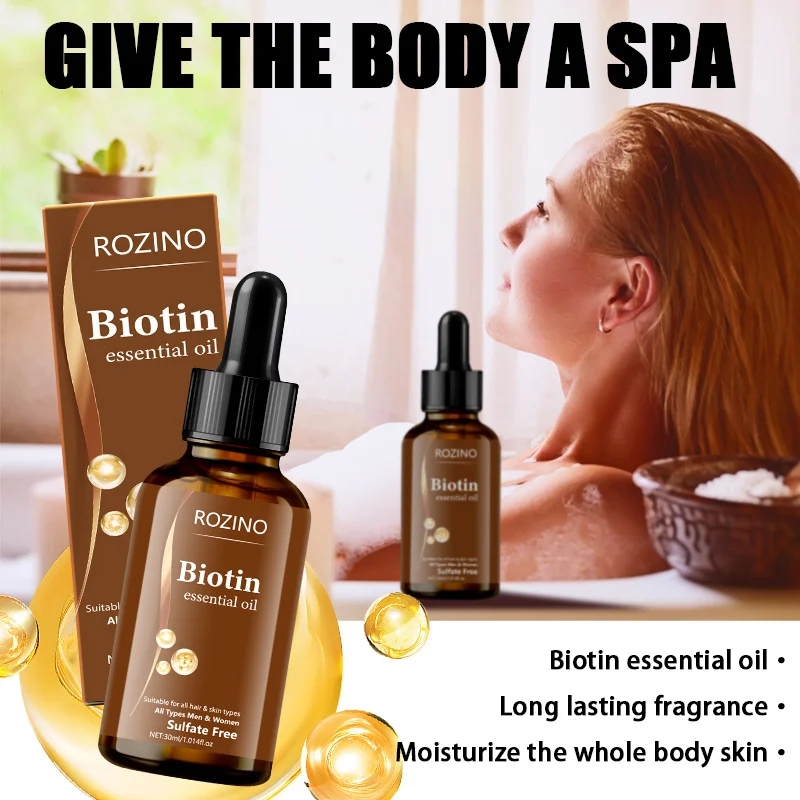
💡 What To Do Instead: Focus on ingredient synergy, not just a long list of claims. Look for a product where the key active ingredients (like biotin for strengthening) are supported by a carrier oil suitable for multiple applications. A product like the ROZINO Biotin Essential Oil is a prime example. Its sulfate-free, biotin-rich formula is gentle enough for facial soothing and pore-refining, yet potent enough for scalp treatments and cuticle care, proving a single, thoughtful blend can cover a lot of ground effectively.
What Actually Works: An Evidence-Based Approach to Beauty Oils
So, after debunking the noise, what’s the signal? How do you actually use oils to get results? Ditch the fear-based rules and follow these principles:
1. Match the Oil to the Job & Your Biology: For your face, seek out non-comedogenic blends with ingredients known for your skin type (soothing for sensitive, clarifying for oily). For hair, lighter oils are for scalp and finer hair; richer oils can treat very dry ends. Don’t use a thick body oil on your face expecting a good result.
2. Embrace Multi-Use, But Be Smart: A truly versatile oil is a workhorse. It should have a clean ingredient list free of sulfates and harsh alcohols, making it safe for sensitive skin and scalp. Its primary active should target a universal need—like barrier repair or hydration. This is where a thoughtfully designed product shines, saving you money and shelf space. The ROZINO serum, for instance, uses biotin and a gentle essential oil blend to address strength and nourishment from head to toe, which is a logical, not gimmicky, approach.
3. Application is Everything: For skin, press a few drops onto damp skin after cleansing to lock in moisture. For hair, apply to a damp scalp as a pre-wash treatment or to damp ends as a leave-in sealer. For a bath, mix with Epsom salts. The method changes the outcome.
4. Consistency Over Quantity: More oil is not better. A few drops are almost always enough. Regular, modest use integrated into your routine will yield better long-term results than an occasional heavy-handed application.
The bottom line? Oils aren’t magic, but they’re also not the villains they’re made out to be. They’re tools. And with the right information, you can finally use them to build a stronger, healthier, and more balanced beauty routine—without falling for the myths.
Nina Patel, Beauty Editor
Award-winning beauty editor covering skincare and wellness trends.

