
Hyaluronic acid is a staple of modern skincare, touted as a hydration hero for everything from wrinkles to thirsty feet. But when it appears in a targeted treatment for cracked heels and rough hands, does its reputation hold up? We often see it in serums for the face, but its application in foot care represents a shift. This ingredient isn’t just for fine lines. It’s a fundamental humectant, and its use in a heavy-duty balm raises an interesting question: can this molecular sponge designed to hold water truly repair the thick, fissured skin of our soles and palms? Let’s examine the science behind it.
⚡ TL;DR
This article covers our hands-on experience with this product. Scroll down for the full story, or jump to our final verdict at the bottom.
What Is Hyaluronic Acid?
At its core, hyaluronic acid is a glycosaminoglycan, a type of carbohydrate naturally present in our skin, connective tissue, and eyes. Its chemical structure is a long, repeating chain of two sugar molecules: D-glucuronic acid and N-acetyl-D-glucosamine. This isn’t a harsh acid in the exfoliating sense. Its primary function is purely about water. Imagine it as a biological sponge with an incredible capacity to attract and bind water molecules—up to 1,000 times its own weight.; It works at the cellular level by forming a viscous, gel-like network in the extracellular matrix (the space between skin cells). This network creates a reservoir of moisture that plumps the skin from within, supports structure, and aids in tissue repair. The wrinkle-reducing effect on the face is a visible result of this hydration plumping action. On thicker skin like the heels, the goal is similar: to deliver significant hydration deep into the dehydrated, often calloused layers to improve suppleness and elasticity, which are prerequisites for healing cracks.
The Evidence
The humectant properties of hyaluronic acid are well-documented. A foundational 2014 study in the Journal of Clinical and Aesthetic Dermatology demonstrated that topical application of low- and high-molecular-weight hyaluronic acid significantly improved skin hydration and elasticity in aged skin. The mechanism is straightforward: it pulls moisture from the deeper dermis and the environment to hydrate the outermost stratum corneum.
More relevant to foot care, a 2021 research review in Skin Pharmacology and Physiology examined humectants in treating xerosis (severely dry skin). It concluded that hyaluronic acid, when paired with occlusive agents like oils or butters, creates a superior barrier repair system. The HA draws in water, and the occlusive layer on top seals it in, preventing evaporation—exactly the kind of dual-action needed for the high-friction, low-oil environment of feet. While most research centers on facial application, the fundamental biophysics of hydration apply across body sites.
How ROZINO Uses It
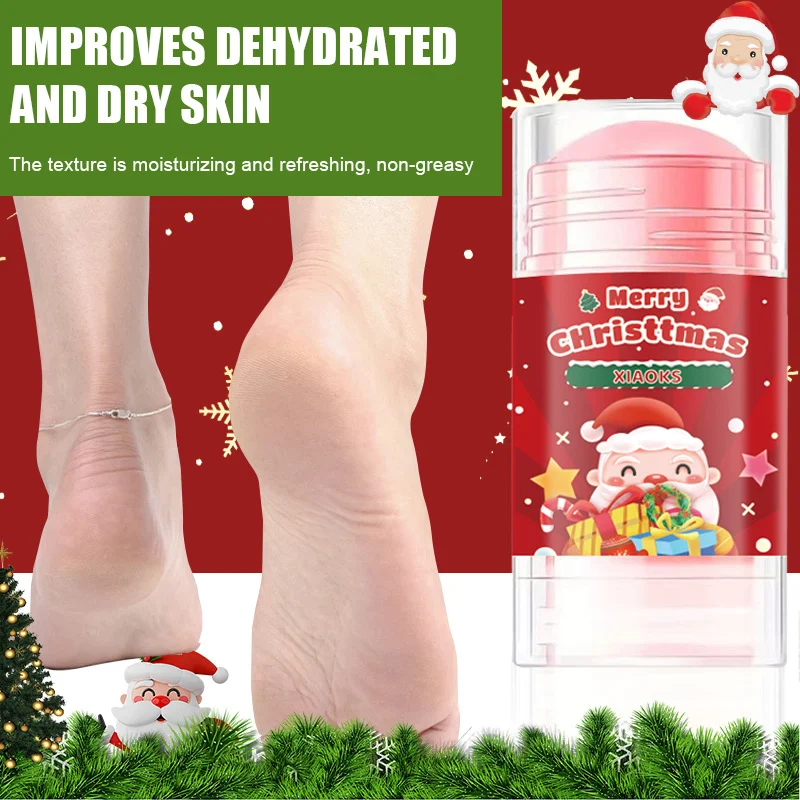
The ROZINO Hand and Foot Care Stick takes a smart, multifunctional approach. Listing hyaluronic acid first among its key ingredients suggests a meaningful concentration, positioning it as the primary hydrating workhorse. Crucially, the formula doesn’t rely on HA alone. It pairs this powerful humectant with lipid-rich emollients like Jojoba Oil and Aloe Vera Oil.
This is the correct formulation strategy for treating cracks. Hyaluronic acid can deliver immediate hydration to parched skin cells, helping to soften the hardened edges of fissures. However, on its own in a dry climate, it could potentially pull moisture from the skin if not sealed. The Jojoba Oil acts as an occlusive barrier, trapping the water HA attracts. This one-two punch addresses both sides of the dry skin equation: adding water and preventing its loss.
The inclusion of Vitamin C (likely as ascorbic acid or a stable derivative) and fruit extracts adds an antioxidant layer. While brightening is less critical for feet, antioxidants help protect newly hydrated skin from environmental stress. The stick format itself is practical, allowing direct, mess-free application to problem areas without over-applying greasy residue.
Who Should (and Shouldn’t) Use It
This balm is ideally suited for individuals with chronically dry, rough, or cracked skin on their hands, heels, and elbows. It will benefit those who work with their hands, are on their feet all day, or live in arid climates. The non-greasy claim suggests it absorbs well, making it suitable for daytime use on hands before tasks.
Precautions are generally minimal given the body skin is less reactive than the face. However, those with confirmed allergies to any listed botanical extracts (Strawberry, Cherry, Aloe) should perform a patch test. While hyaluronic acid is non-comedogenic and safe for all skin types, the formula’s overall richness might feel too heavy for someone with naturally oily skin or active infections like athlete’s foot. It’s a treatment for dryness and cracking, not a medicated antifungal. If cracks are deep, bleeding, or show signs of infection, consult a doctor before using any cosmetic balm.
The Bottom Line
The ROZINO balm uses hyaluronic acid correctly within its formulation context. It isn’t presenting a miracle cure but a scientifically sound approach to intense moisturizing. By coupling a high-performance humectant with protective oils, it creates a closed-loop hydration system designed to soften, smooth, and support the skin’s barrier on areas that endure significant wear and tear. More research is needed on long-term effects of repeated high-concentration HA application on barrier function, but current evidence strongly supports its role in managing severe dryness.
For the specific issue of cracked heels and dry hands, this stick appears to be a well-conceived product. Its effectiveness will hinge on regular use, as consistent hydration is key to repairing a compromised barrier. It’s a practical, giftable example of translating a trendy facial ingredient into effective, no-nonsense body care.

