body { font-family: -apple-system, BlinkMacSystemFont, ‘Segoe UI’, Roboto, Oxygen, sans-serif; line-height: 1.6; color: #333; max-width: 800px; margin: 40px auto; padding: 20px; }
h2 { color: #222; border-bottom: 2px solid #f0f0f0; padding-bottom: 10px; }
.myth-section { background: #f9f9f9; padding: 20px; border-radius: 10px; margin: 30px 0; border-left: 4px solid #e74c3c; }
.truth-section { background: #e8f4f8; padding: 20px; border-radius: 10px; margin: 30px 0; border-left: 4px solid #3498db; }
.advice-section { background: #eaf7ea; padding: 20px; border-radius: 10px; margin: 30px 0; border-left: 4px solid #2ecc71; }
.icon { font-size: 1.5em; margin-right: 10px; }
strong { color: #2c3e50; }
.product-ref { background-color: #fff8dc; padding: 15px; border-radius: 8px; margin: 20px 0; font-style: italic; }
a { color: #2980b9; text-decoration: none; }
a:hover { text-decoration: underline; }
Let’s be honest: the eye cream aisle is a minefield of magical promises and suspiciously high price tags. One jar claims to erase a decade of late nights, another swears it can banish genetic dark circles. It’s no wonder misinformation runs wild. Between clever marketing that preys on our insecurities and a flood of “miracle” DIY advice from social media, separating fact from fiction feels like a full-time job. I’ve spent years and a small fortune trying products that did exactly nothing, all because I bought into the hype. It’s time to clear the air with some cold, hard truths.
Myth #1: “The More You Spend, The Better It Works”
❌ The Myth: Luxury eye creams with astronomical price tags contain “secret,” superior ingredients that drugstore brands can’t match. That $200 jar is an investment in your future face.
✅ The Truth: Price is a terrible indicator of efficacy. A consultant I spoke with, who has worked with both mass and luxury labs, confirmed that a huge portion of the cost goes into packaging, marketing, and perceived prestige—not the formula. The active ingredients that actually do the work (like caffeine, peptides, and certain antioxidants) are widely available and used across all price points. But wait—if that were true, wouldn’t everyone just buy the cheapest one? Not exactly. It’s about which actives are used, at what concentration, and in what kind of base, not the logo on the jar.
💡 What To Do Instead: Become an ingredient detective. Ignore the fancy names and mystical claims. Turn the bottle around and look for proven actives. A solid formula targeting puffiness and dark circles will proudly feature caffeine high on the list. For wrinkles, look for peptides or retinoids. A good moisturizing base with ingredients like shea butter or hyaluronic acid is non-negotiable. Judge the product by its ingredient deck, not its price tag.
Myth #2: “Eye Cream is Just Expensive Face Moisturizer”
❌ The Myth: Eye cream is a scam. You can just use your regular face moisturizer around your eyes and save your money. It’s all the same stuff.
✅ The Truth: While a basic moisturizer can provide hydration, the skin around your eyes is fundamentally different. It’s the thinnest skin on your body, has almost no oil glands, and is in constant motion. I used to believe Myth #2 myself until a dermatologist broke it down for me: a face cream designed for oilier T-zones or thicker cheek skin can be too heavy, leading to milia (those tiny white bumps), or not potent enough to address specific concerns like capillary-related dark circles. Furthermore, face creams may contain fragrances or essential oils that are too irritating for this delicate area. A dedicated eye product is formulated for thinner skin, with targeted ingredients and a texture that absorbs quickly without pulling.
💡 What To Do Instead: Don’t skip an eye-specific product, but do choose a smart one. Look for formulas that acknowledge the eye area’s unique needs. This is where the concept of a day and night system makes real sense. During the day, you need lighter protection and hydration that works under makeup. At night, your skin repairs itself, so a richer, treatment-oriented cream can work more effectively. Using the same product 24/7 misses the opportunity to support your skin’s natural rhythms.
Myth #3: “Any Caffeine Product Will Instantly Fix Dark Circles”
❌ The Myth: Slap on any cream with “caffeine” on the label and watch your dark circles vanish overnight. It’s a one-ingredient miracle.
✅ The Truth: Caffeine is a fantastic ingredient for the eye area—it constricts blood vessels to reduce puffiness and can help brighten the appearance of bluish-toned dark circles caused by those vessels showing through thin skin. However, it is not a magic wand. Dark circles can be caused by genetics (pigmentation), volume loss (shadowing), or allergies, which caffeine alone won’t fix. More importantly, caffeine works best in a supportive formula. If it’s in a drying or poorly penetrating base, you won’t get the full benefit. The real magic is in the formulation—how the caffeine is delivered and what other ingredients support its action.
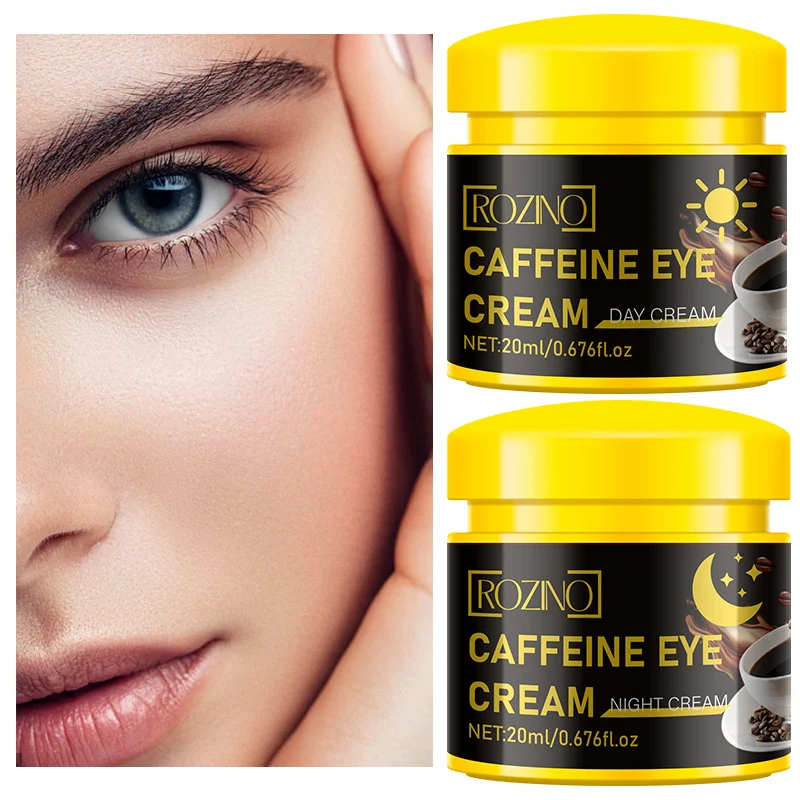
💡 What To Do Instead: Seek out caffeine as part of a thoughtful, multi-tasking blend. For example, a product like the ROZINO Caffeine Eye Cream Set pairs caffeine with skin-soothers like aloe vera and rich emollients like shea butter and botanical oils. This approach does two key things: the caffeine targets puffiness and vascular darkness, while the nourishing base intensely hydrates and fortifies the thin skin, making it appear plumper and healthier overall. It’s the combination that creates a visible difference, not a single bullet ingredient.
What Actually Works: A No-Nonsense Routine
So, after debunking the noise, what’s the signal? Effective eye care isn’t about mystery or extravagance; it’s about consistent, intelligent application of proven science.
First, manage your expectations. No topical cream can alter bone structure or remove deep-set genetic pigmentation. The goal is significant improvement in the appearance of puffiness, fine lines, and fatigue-related darkness.
Second, adopt a two-phase approach. Your eyes need different support at different times. A dedicated daytime eye cream should be lightweight, fast-absorbing, and ideally contain some antioxidants for protection. Your nighttime formula can be richer, packed with reparative ingredients, and work while you sleep. This is the logic behind systems like the ROZINO set, which provides a fresh Day Cream for hydration and a nurturing Night Cream for repair—it’s a logical, evidence-based strategy.
Third, technique matters. Never drag or rub. Use your ring finger (it applies the least pressure) to gently pat or tap the product from the inner corner outward until absorbed. This ensures delivery without stressing the skin.
You might also enjoy our take on My Search for the Perfect Bedtime Ritual (And the Lavender Massage Oil That Finally Worked).
For more on this topic, check out ROZINO Peach Stick Review: The “Little Iron” That Saved My Tech Neck.
Finally, pair your topical routine with lifestyle factors. Get enough sleep, manage allergies, wear sunglasses, and stay hydrated. The best eye cream in the world can’t compensate for chronic sleep deprivation.
The bottom line? Stop falling for fairy tales. Look for smart formulations with clear, effective ingredient lists that respect your skin’s biology. A product that separates day and night care, like the caffeine-focused ROZINO set, is a practical example of this principle in action—it targets the problem with the right tools at the right time, no magic required.