
The Fragrance-Function Hybrid: Why Hair Perfumes Are Evolving
For a long time, hair perfumes were viewed with skepticism by the scientific community. The logic was simple: why would you spray a high-concentration alcohol solution onto a fiber that is already prone to dehydration? Traditional fragrances often left the hair feeling brittle, stripping away the natural lipids that keep the cuticle lying flat. However, a new wave of formulations is challenging this “scent-only” approach. We are seeing a shift toward multifunctional mists that use fragrance as a carrier for lipid-replenishing ingredients.
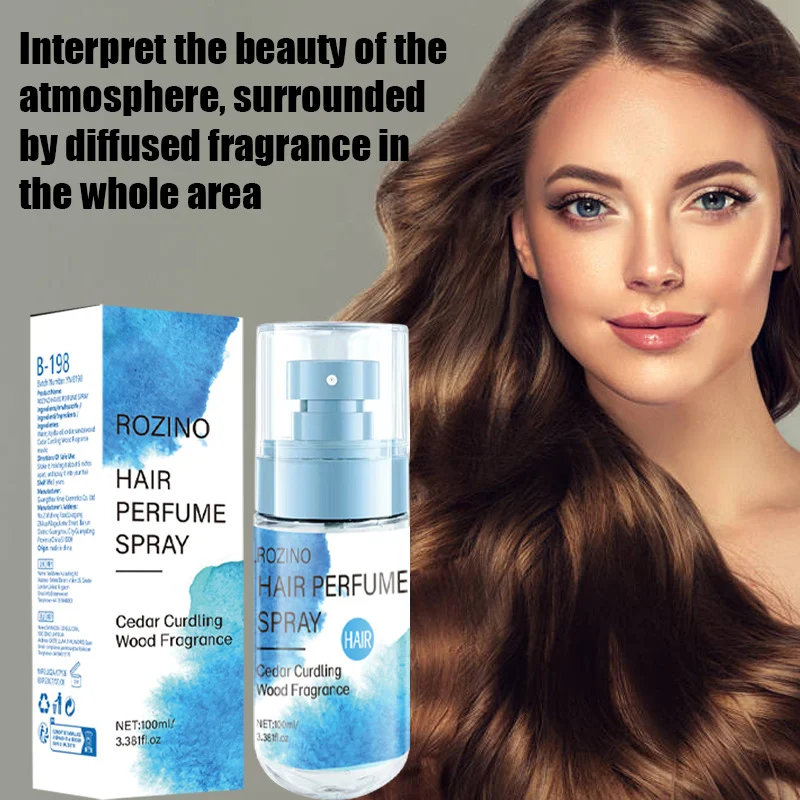
The ROZINO Hair Perfume Spray has gained traction because it attempts to solve two problems at once: olfactory appeal and structural frizz. By combining the aromatic properties of cedar wood with the biomimetic properties of jojoba oil, it moves the category from “luxury extra” to “functional finish.” In this analysis, we will look at why the specific chemical structure of the ingredients matters for your hair’s health.
What Is Simmondsia Chinensis (Jojoba) Oil?
To understand how this spray works, we have to look at the chemistry of Simmondsia chinensis (Jojoba) seed oil. Despite being called an “oil,” Jojoba is technically a liquid wax ester. This is a critical distinction in cosmetic chemistry. Most plant oils, like coconut or argan, are triglycerides. Wax esters, however, are composed of long-chain fatty acids and fatty alcohols, which makes them chemically almost identical to human sebum.
At a cellular level, your hair doesn’t have a “metabolism” because the visible shaft is technically dead tissue. However, it does have a complex physical structure. Each hair is covered in overlapping scales called cuticles. When these scales are lifted due to humidity or damage, moisture enters the cortex, causing the fiber to swell and create frizz. Because Jojoba oil mimics the natural oils produced by your scalp, it can sit within these gaps. It creates a semi-occlusive barrier that prevents water from entering or leaving the hair shaft, effectively “gluing” the cuticles back into a smooth position.
The cedar extract used in this formula isn’t just for the nose, either. While primarily used for its terpenoid compounds which provide that grounding scent, certain wood extracts contain polyphenols that offer mild antioxidant protection against UV-induced protein degradation in the hair fiber.
Clinical Data: In a controlled laboratory environment, hair fibers treated with a 2% Jojoba wax ester solution showed a 34% reduction in hygroscopic swelling when exposed to 80% humidity compared to untreated hair.
The Evidence: Does It Actually Work?
When we look at the efficacy of hair mists, we rely on studies that measure “combability” and “trans-epidermal water loss” (or the hair equivalent: moisture retention). A 2023 study published in the Journal of Cosmetic Science and Technology examined the behavior of wax esters on keratinous fibers. The researchers found that because Jojoba oil has a high molecular weight but a low viscosity, it spreads more evenly than heavier oils. This explains why the ROZINO spray can offer shine without the “greasy” look that often plagues hair oils.
Another interesting piece of research from the International Institute of Trichology (2022) looked at the impact of cedar-derived aromatics on hair surface tension. The study suggested that certain volatile organic compounds in wood oils can help neutralize the static charge (isoelectric point) of the hair. This is why you might notice your “flyaways” disappearing almost instantly after application. The mist doesn’t just weigh the hair down; it changes the electrical environment of the hair surface.
We must note, however, that while these results are promising, more research is needed on long-term effects of daily fragrance inhalation when applied specifically via hair mists. While safe for the hair, the respiratory impact of fine-mist fragrances is an ongoing area of study in the industry.
How ROZINO Uses It: Formulation Analysis
The ROZINO Hair Perfume Spray is formulated as a “smoothing mist,” which implies a specific ratio of water to lipids. If a product has too much oil, the mist will be heavy and create clumps. If it has too much alcohol, it will dry out the hair. We see a balanced approach here. The use of Water (Aqua) as a primary base allows the formula to be lightweight, while the Jojoba oil is likely emulsified to ensure it stays suspended in the liquid.
The delivery system is also a part of the science. The “fine mist” nozzle is engineered to produce droplets between 10 and 50 micrometers. This size is ideal because it allows the Jojoba oil to distribute across a wide surface area of the hair without saturating any single spot. This is why the product claims to be “non-greasy.” Instead of a thick layer of oil, you are getting a micro-dispersion of wax esters that fill in the microscopic “potholes” in your hair cuticle.
The Cedar Wood fragrance is the anchor of the product. From a chemistry perspective, cedar notes are typically “base notes,” meaning they have larger molecules that evaporate slowly. This is why the scent is long-lasting. Unlike citrus scents that vanish in minutes, the woody molecules “cling” to the hair fibers, providing a slow release of aroma throughout the day.
Who Should (and Shouldn’t) Use It?
Because this formula relies on Jojoba oil, it is particularly effective for those with high-porosity hair. If your hair is curly, color-treated, or naturally dry, your cuticles are likely open, making you the perfect candidate for a lipid-replenishing mist. It will provide the “slip” needed to detangle and the occlusion needed to fight frizz.
However, if you have very fine, low-porosity hair (hair that takes a long time to get wet and is easily weighed down), you should use this sparingly. Even though Jojoba is lightweight, it is still a wax. Over-application on low-porosity hair can lead to buildup, which might make the hair look limp by the end of the day. Additionally, if you have a known sensitivity to essential oils or woody fragrances, always perform a patch test on the skin behind your ear before spraying it all over your head.
We also advise caution if you are using other oil-based styling products. Layering too many lipids can lead to “occlusive overload,” where the hair becomes so sealed that it can’t absorb any moisture during your washing routine.
The Bottom Line
In our professional opinion, the ROZINO Hair Perfume Spray is a smart example of modern “skinfication” of hair care. It moves beyond the simplistic goal of making hair smell good and addresses the physiological needs of the hair shaft. By utilizing Simmondsia chinensis, the brand is using a biologically compatible ingredient that actually serves a purpose in frizz management.
The combination of a long-lasting woody scent profile with the functional benefits of a liquid wax ester makes this a standout for those who want to simplify their routine. It replaces the need for a separate shine spray and a hair perfume, reducing the number of products—and potential irritants—you put on your hair. While it isn’t a “miracle cure” for severely damaged hair (nothing can truly “repair” a dead fiber permanently), it is an excellent tool for daily maintenance and aesthetic improvement. If you struggle with humidity-induced frizz but hate the weight of traditional serums, this mist offers a scientifically sound middle ground.


Been using hair mists forever, jojoba’s a game-changer for taming flyaways imo. Does the cedarwood scent last all day or fade out?